


Every week, a non-technical founder gets told to use another AI tool.
Cursor. Lovable. Bolt. Replit. Claude. v0.
A new thing comes out. Someone posts a demo. Someone else says the old workflow is dead.
The founder is left trying to figure out what actually matters.
By the end of this piece, you should have a cleaner way to judge what AI can help you build, where production software still needs human judgment, and why the spec has become the most important artifact in the room.
A founder asked me a question last week that every non-technical founder building with AI is going to ask eventually.
He had a prototype in front of him.
It worked.
The design looked right. The flow made sense. The interaction was there. From his side of the screen, the obvious question was:
Why can’t the developers just use this code?
It is a fair question.
AI tools and design tools are now good enough to create things that feel real. They can generate screens, wire up interactions, produce components, and make a founder feel like the product is closer than it actually is.
That feeling is useful.
It is also dangerous.
Because a software product does not move through one stage. It moves through four.
Prototype. Spec. Production. Refinement.
The prototype answers:
“Does it feel right?”
This is where AI is obviously useful. It can make the idea visible. It can give you screens to react to. It can help you show a flow, test a concept, or explain what you mean faster than a written brief ever could.
A prototype helps the founder say, “Yes, that is closer to what I had in mind.”
That matters.
The mistake is treating that as the finish line.
The spec answers:
“What must it do?”
This is the stage most founders skip because the prototype feels like it already answered the question.
It did not.
The spec defines the product behavior. It names the rules, states, data, permissions, edge cases, error paths, and business logic.
What happens when payment fails?
What does a user see when there is no data yet?
Who can edit this record?
What should never happen?
Which customer action proves this feature worked?
Those decisions need to live somewhere durable. If they stay trapped in your head, the developer guesses. If they stay trapped in a meeting, the team forgets. If they stay out of the prompt, the agent invents.
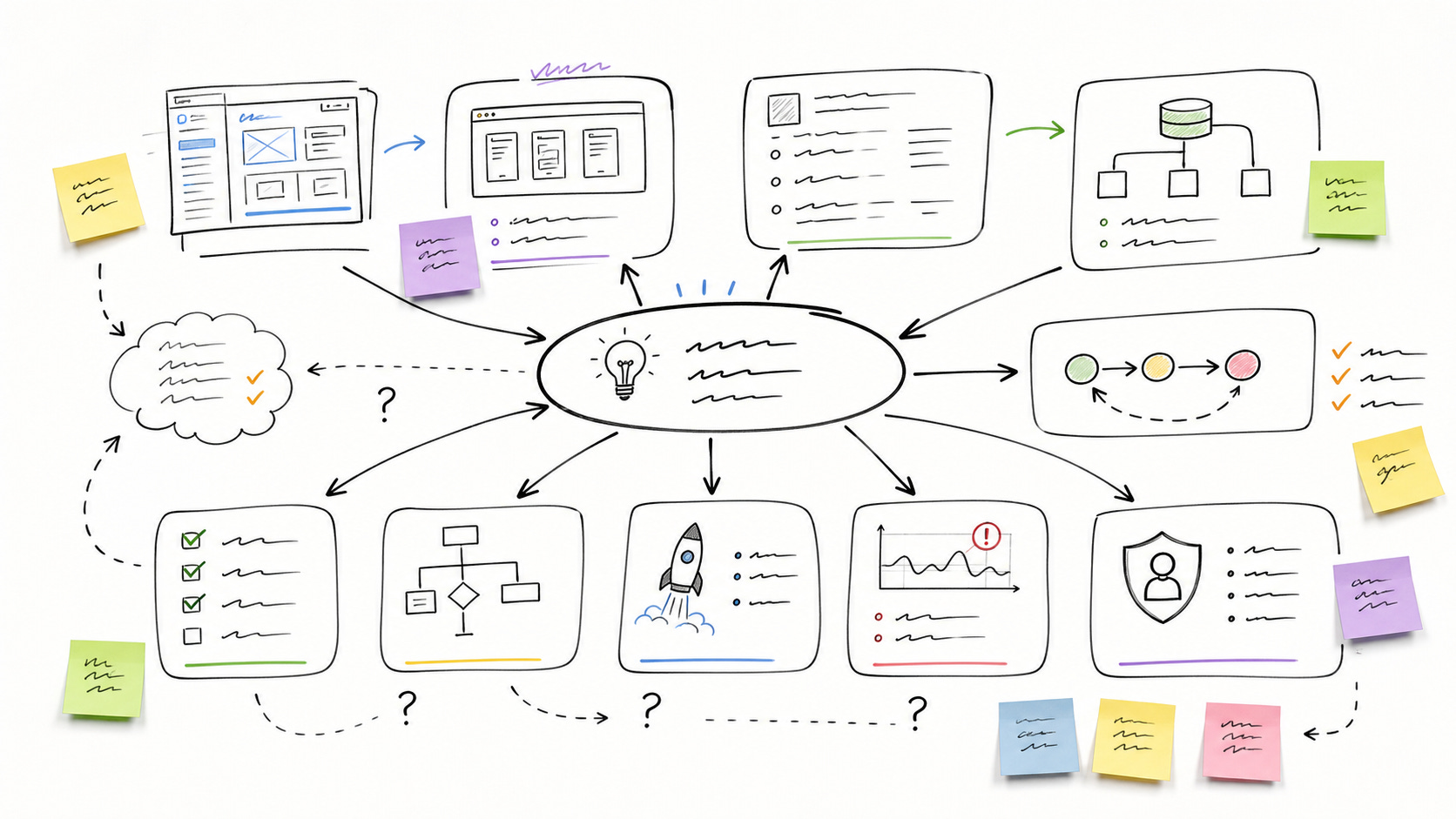
The spec is the translation layer between founder expertise, developers, and agents.
Then comes production.
Production answers:
“Can customers rely on it?”
This is where the prototype-code question gets real.
A prototype can show the desired interaction. Production software has to connect to real data, enforce states, respect permissions, pass tests, deploy cleanly, monitor failures, recover from mistakes, and keep running when customers are using it.
That is a different job.
A screen that works once in a demo is not the same thing as a system that can run your business.
The last stage is refinement.
Refinement answers:
“How should this improve based on customer feedback?”
Once customers touch the product, the work changes again.
Now you are not guessing from inside the room. You are interpreting signal.
A bug report might be a defect.
It might be a missing requirement.
It might be a confused user.
It might be a customer asking for something that sounds small but breaks the product model.
Founder judgment matters here because feedback is not automatically direction. Someone has to decide what is signal, what is noise, what belongs now, and what belongs later.
That is the part AI cannot own for you.
AI can help across all four stages.
It can help prototype.
It can help draft a spec.
It can help write production code.
It can help summarize feedback.
What it cannot do is replace the founder’s judgment about what matters.
That is the piece non-technical founders are missing when the market keeps shouting tool names at them.
The founder does not need to become technical.
The founder does need enough fluency to ask better questions.
What stage are we in?
Are we proving the feel, defining the behavior, hardening for customers, or improving from feedback?
What decision is missing?
What risk are we accepting?
What needs to be written down so the team and the agents stop guessing?
That is Founder Fluency.
It is the ability to connect technical work to business risk.
The best AI workflow in the world still needs that.
Because walking away from the build is the fantasy.
Staying in command is the durable path.
Non-technical founders can build real software companies without raising VC, giving away half the business, or learning to code themselves.
The tools are good enough now.
The missing piece is judgment around the tools.
Prototype to make the idea visible.
Spec to define what it must do.
Production to make it reliable.
Refinement to make it better.
Keep your judgment across the whole chain.
That is how AI becomes a way to build your company instead of another thing you are overwhelmed by.